missing translation for 'onlineSavingsMsg'
Learn More
Learn More
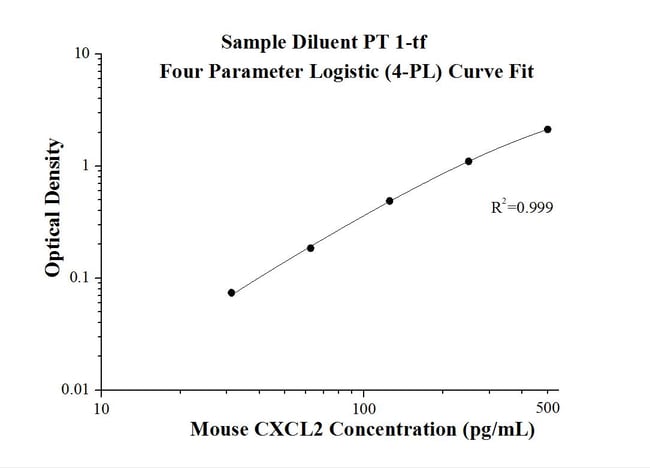
Descrizione
- The assay recognizes mouse CXCL2. An antibody specific for CXCL2 has been pre-coated onto the microwells.
- The CXCL2 protein in samples is captured by the coated antibody after incubation. Following extensive washing, another antibody of biotinylated specific for CXCL2 is added to detect the captured CXCL2 protein.
- For signal development, Streptavidin-HRP is added, followed by Tetramethyl-benzidine (TMB) reagent.
- Solution containing sulfuric acid is used to stop color development and the color intensity which is proportional to the quantity of bound protein is measurable at 450nm with the correction wavelength set at 630 nm
- Cxcl2, also known as macrophage inflammatory protein 2-alpha (Mip2-alpha), is a member of CXC chemokine family that binds to CXC chemokine receptor 2 (Cxcr2).
- Cxcl2 is mainly produced by macrophages, endothelial cells, epithelial cells and tumor cells. Cxcl2 plays important roles in various biological progresses such as angiogenesis, inflammation, immune response and cancer biological behaviors.
- Under inflammatory conditions in CNS, microglia and astrocytes may secrete Cxcl2 as well as other chemokines, which induces chemotaxis and infiltration of circulatory neutrophils.
- Indeed, previous studies suggest that Cxcl2 is involved in Alzheimer disease, multiple sclerosis and brain ischemia.
Specifica
Specifica
| Numero di accesso | NP_033166 |
| Intervallo saggio | 31.25 to 500 pg/mL |
| Assay Sensitivity | 20.5 pg/mL |
| Certificazione/Conformità | ISO 13485 |
| Metodo di rilevamento | Sandwich ELISA, Double Antibody |
| Immunoassay Kit Format | Coated ELISA Kit |
| Tipo di campione | Plasma, Serum |
| Substrato | DAB |
| Target Species | Mouse |
| ID gene (immissione) | 20310 |
| Vedi altri risultati |
Sicurezza e movimentazione


Identificativo prodotto
- 96TEST Human TIMP1 ELISA Kit
- Attenzione
- Lesione oculare grave/irritazione oculare Categoria 1
- Lesione oculare grave/irritazione oculare Categoria 2
- Corrosione/irritazione della pelle Categoria 2
- Tossicità specifica per organi bersaglio (esposizione singola) Categoria 3
- H302-Nocivo se ingerito.
- H315-Provoca irritazione cutanea.
- H318-Provoca gravi lesioni oculari.
- H319-Provoca grave irritazione oculare.
- H332-Nocivo se inalato.
- H335-Può irritare le vie respiratorie.
- P201-Procurarsi istruzioni specifiche prima dell'uso.
- P202-Non manipolare prima di avere letto e compreso tutte le avvertenze.
- P234-Conservare soltanto nel contenitore originale.
- P264-Lavare accuratamente dopo l'uso.
- P270-Non mangiare, né bere, né fumare durante l'uso.
- P273-Non disperdere nell'ambiente.
- P280-Indossare guanti/indumenti protettivi/Proteggere gli occhi/il viso.
- P301+P310-IN CASO DI INGESTIONE: contattare immediatamente un CENTRO ANTIVELENI/un medico/
- P301+P312-IN CASO DI INGESTIONE accompagnata da malessere: contattare un CENTRO ANTIVELENI/medico/
- P302+P352-IN CASO DI CONTATTO CON LA PELLE: lavare abbondantemente con acqua/.
- P304+P340-IN CASO DI INALAZIONE: trasportare l'infortunato all'aria aperta e mantenerlo a riposo in posizione che favorisca la respirazione.
- P308+P313-IN CASO di esposizione o di possibile esposizione, consultare un medico.
- P330-Sciacquare la bocca.
- P362-Togliere gli indumenti contaminati.
- P405-Conservare sotto chiave.
- P501b-Smaltire il prodotto/recipiente in conformità con le disposizioni locali/regionali/nazionali/internazionali.
- MIXTURE LIST-Contain: Sulphuric Acid, Tetramethylbenzidine
Titolo del prodotto
Facendo clic su Invia, l'utente riconosce che potrebbe essere contattato da Fisher Scientific in merito al feedback fornito in questo modulo. Non condivideremo le vostre informazioni per altri scopi. Tutte le informazioni di contatto fornite saranno conservate in conformità con la nostra Politica sulla privacy. Informativa sulla privacy.
Individuate un'opportunità di miglioramento?