missing translation for 'onlineSavingsMsg'
Learn More
Learn More

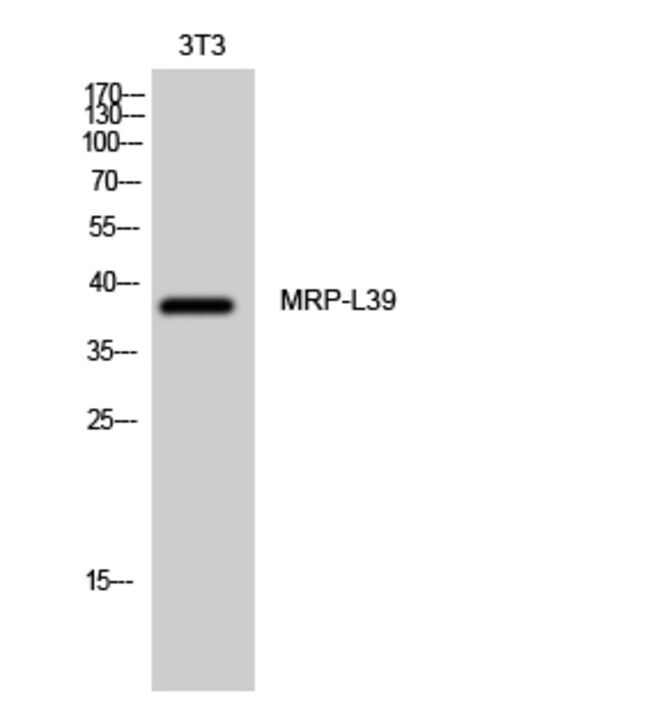
Invitrogen™ MRPL39 Polyclonal Antibody
Descrizione
MRPL39 Polyclonal Antibody detects endogenous levels of MRPL39 protein.
Mammalian mitochondrial ribosomal proteins are encoded by nuclear genes and help in protein synthesis within the mitochondrion. Mitochondrial ribosomes (mitoribosomes) consist of a small 28S subunit and a large 39S subunit. They have an estimated 75% protein to rRNA composition compared to prokaryotic ribosomes, where this ratio is reversed. Another difference between mammalian mitoribosomes and prokaryotic ribosomes is that the latter contain a 5S rRNA. Among different species, the proteins comprising the mitoribosome differ greatly in sequence, and sometimes in biochemical properties, which prevents easy recognition by sequence homology. This gene encodes a 39S subunit protein. Two transcript variants encoding distinct isoforms have been described. A pseudogene corresponding to this gene is found on chromosome 5q.

Specifica
Specifica
| Antigene | MRPL39 |
| Applicazioni | Immunohistochemistry, Western Blot |
| Classificazione | Polyclonal |
| Concentrazione | 1 mg/mL |
| Coniugato | Unconjugated |
| Formulazione | PBS with 50% glycerol, 0.5% BSA and 0.02% sodium azide; pH 7.4 |
| Gene | MRPL39 |
| N. accesso geni | Q9NYK5 |
| Alias gene | 39S ribosomal protein L39, mitochondrial; 39S ribosomal protein L5, mitochondrial; C21orf8; C21orf92; L39mt; L5mt; Mitochondrial large ribosomal subunit protein mL39; mitochondrial ribosomal protein L39; MRPL39; MRP-L39; MRPL5; MRP-L5; MSTP003; ORF22; PRED22; PRED66; ribosomal protein, mitochondrial, L5; RPML5 |
| Simboli geni | MRPL39 |
| Vedi altri risultati |
Titolo del prodotto
Facendo clic su Invia, l'utente riconosce che potrebbe essere contattato da Fisher Scientific in merito al feedback fornito in questo modulo. Non condivideremo le vostre informazioni per altri scopi. Tutte le informazioni di contatto fornite saranno conservate in conformità con la nostra Politica sulla privacy. Informativa sulla privacy.
Individuate un'opportunità di miglioramento?